

Beyond Eye Drops: Modern Treatments for Chronic Dry Eye


If you've tried every eye drop on the shelf and still struggle with dry, irritated eyes, you're not alone.
For many people, dry eye treatment starts with artificial tears, warm compresses, or prescription eye drops. While these treatments can be helpful, they don't always address the underlying causes of chronic dry eye disease.
The good news? Dry eye care has come a long way, and there are more treatment options available today than ever before.
At the Dry Eye Center of Arkansas, we specialize in identifying the root causes of dry eye symptoms and developing personalized treatment plans that go beyond traditional eye drops.
Why Aren't Eye Drops Always Enough?
One of the biggest misconceptions about dry eye disease is that it simply means your eyes aren't producing enough tears. In reality, dry eye is often much more complex.
There are two primary types of dry eye disease:
Evaporative Dry Eye: Often caused by meibomian gland dysfunction (MGD), which occurs when the oil-producing glands along your eyelids aren't functioning properly. Without a healthy oil layer, tears evaporate too quickly.
Aqueous-Deficient Dry Eye: Occurs when your eyes don't produce enough of the watery component of your tears.
Many patients experience a combination of both types, along with inflammation, eyelid disease, or other contributing factors.
Artificial tears can temporarily improve comfort, but they don't necessarily correct gland dysfunction, chronic inflammation, or other underlying issues.
That's where advanced dry eye treatments come in.
1. Intense Pulsed Light (IPL): Targeting Inflammation and Gland Dysfunction
Intense Pulsed Light (IPL) therapy is one of the most common advanced treatments we offer for patients with meibomian gland dysfunction and ocular rosacea.
IPL uses carefully controlled pulses of light applied to the skin around the eyes to help address inflammation and improve meibomian gland function.
For appropriately selected patients, IPL may help:
Reduce inflammatory changes associated with ocular rosacea
Improve the quality of oils produced by the meibomian glands
Support a more stable tear film
Reduce dry eye symptoms over a series of treatments
IPL is typically performed as a series of sessions, with maintenance treatments recommended based on individual needs.
2. Radiofrequency (RF): Another Approach to Meibomian Gland Treatment
Radiofrequency therapy uses controlled energy to gently heat tissue around the eyelids.
In dry eye care, RF may be used as an adjunctive treatment to help warm the meibomian glands and support the expression of thickened oils.
Some patients may benefit from RF as part of a broader treatment plan, particularly when gland obstruction is contributing to evaporative dry eye.
3. Low-Level Light Therapy (LLLT): Supporting Ocular Surface Health
Low-Level Light Therapy uses specific wavelengths of light to influence cellular activity.
In dry eye management, LLLT is sometimes incorporated into treatment plans for patients with meibomian gland dysfunction or ocular surface inflammation.
It is a noninvasive treatment that may complement other therapies, including IPL.
4. Autologous Serum Tears: Personalized Drops Made From Your Own Blood
Not all eye drops are created equal. For patients with more complex or severe ocular surface disease, autologous serum tears (AST) may be an option.
These specialized drops are prepared using a patient's own blood serum, which contains naturally occurring proteins and growth factors that can help support the ocular surface.
Autologous serum tears may be recommended for patients with:
Severe or persistent dry eye disease
Significant corneal staining or epithelial damage
Neurotrophic keratitis
Recurrent corneal erosions
Certain complex ocular surface conditions
At Dry Eye Center of Arkansas, we offer on-site blood collection for autologous serum tear preparation, making this advanced treatment more convenient for our patients.
5. Amniotic Membrane Therapy: Supporting Corneal Healing
When dry eye disease becomes severe, the surface of the cornea can become damaged.
Amniotic membrane therapy is a specialized treatment that may help support healing in patients with significant ocular surface disease.
Amniotic membranes contain biologically active components that can help reduce inflammation and promote epithelial healing.
This treatment may be considered for patients with persistent corneal staining, recurrent corneal erosions, neurotrophic keratitis, or other difficult-to-treat corneal conditions.
6. Punctal Occlusion: Helping Your Natural Tears Stay Longer
Sometimes, the problem isn't how quickly tears evaporate, but how quickly they drain away.
Punctal occlusion is designed to reduce tear drainage through the small openings in the eyelids called puncta.
At the Dry Eye Center of Arkansas, we offer options including Lacrifill, a hyaluronic acid-based gel designed to temporarily block tear drainage.
For appropriately selected patients, punctal occlusion can help retain natural tears on the ocular surface and improve lubrication.
Because retaining tears can also retain inflammatory substances, it's important to evaluate and address significant ocular surface inflammation when determining whether punctal occlusion is appropriate.
Which Dry Eye Treatment Is Right for You?
Here's the important thing to understand: There is no single treatment that works for every dry eye patient.
Two people may experience nearly identical symptoms but have completely different underlying causes.
One patient may primarily have meibomian gland dysfunction, while another may struggle with reduced tear production, inflammation, or damage to the corneal nerves.
That's why a comprehensive dry eye evaluation is so important.
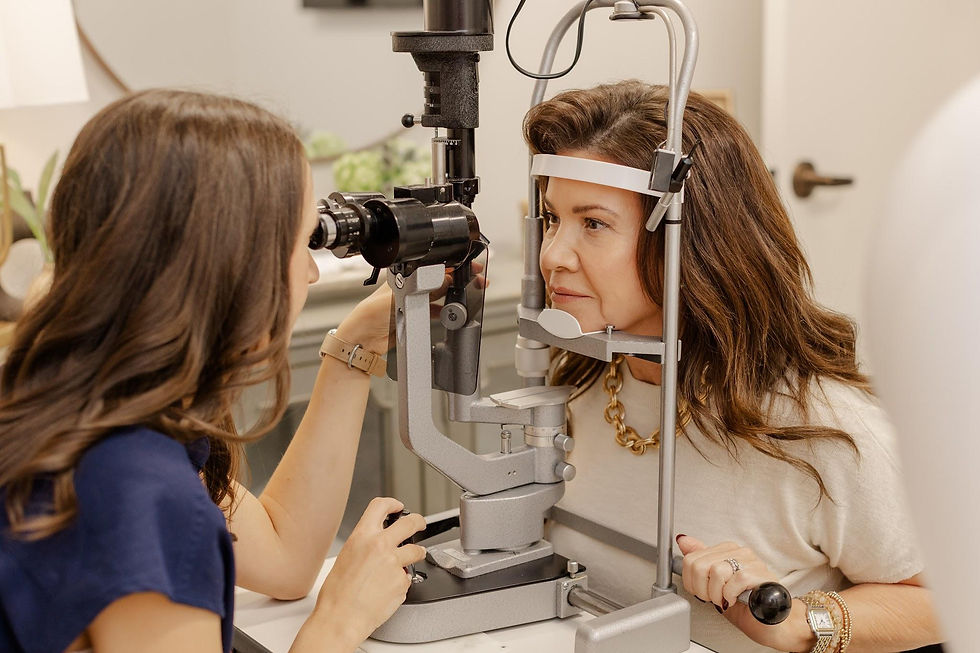
At Dry Eye Center of Arkansas, we use advanced diagnostic testing to evaluate tear film stability, meibomian gland health, and the ocular surface.
From there, we develop an individualized treatment plan that may include at-home therapies, prescription medications, in-office procedures, or a combination of treatments.
Ready to explore your options?
Schedule a comprehensive dry eye evaluation with our team.

Comments